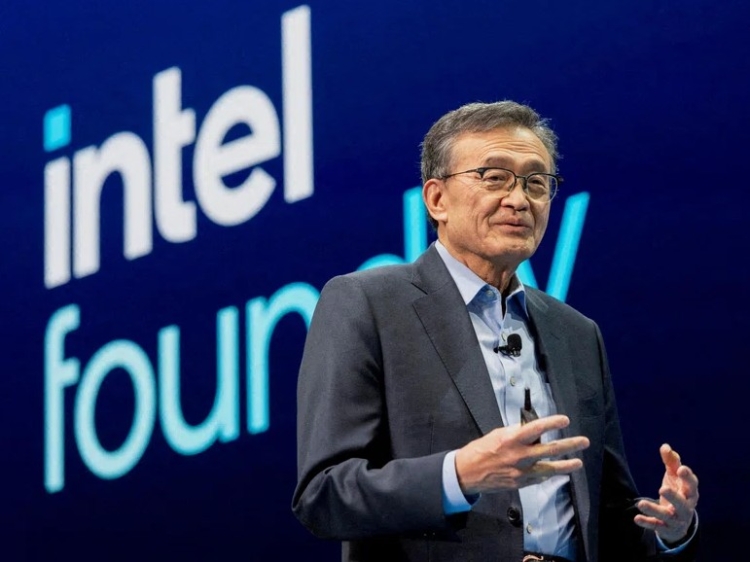
The row ignited when Tan pushed Chipzilla to chase AI outfit Rivos after Meta started sniffing around the startup. The messy part was that Tan chaired Rivos while running Chipzilla, leaving him straddling both sides of a high-stakes bidding chase.
Three people familiar with the matter told Reuters that Tan had first urged Chipzilla’s board to buy Rivos in the summer of 2025, although directors rejected the idea. They said he had a conflict because he was representing both firms and had not produced a convincing AI strategy to justify the takeover.
Tan then asked a lieutenant to refine the AI plan, which opened talks with Rivos, but any hope of calm was dashed when Meta made its offer. Chipzilla countered, Meta sweetened its bid, and the contest drove the final valuation well beyond the $2 billion Rivos had sought earlier this year. Some sources put the outcome at around $4 billion by the time Meta said in September it would buy the startup, inflating the returns at Meta’s expense.
Reuters could not determine Tan’s personal gain as a Rivos shareholder because the figures are private. Walden Catalyst, his venture firm, bragged in a blog post that he had delivered a “successful outcome” and applauded the Rivos team on their “remarkable achievement.”
Two sources said this was one of at least three cases in which Chipzilla pursued deals that benefited Tan, either through attempted acquisitions or Intel Capital’s investments.
Tan was hired in March partly for his venture capital nous and huge contact book, which helped Chipzilla land a $5 billion investment from Nvidia and a $2 billion injection from SoftBank. Since joining, he has been required to recuse himself from investment decisions in which he might personally gain. Two sources said he cannot attend or vote on such decisions at the board level or through Intel Capital. However, previous leadership had far fewer private investments, so recusals were rare.
If Tan steps aside from Intel Capital decisions, the authority falls to chief financial officer David Zinsner, the first two sources said.
The board knew Tan’s sprawling portfolio across chip and tech outfits could spark conflicts, although one person said it accepted the risk in hopes of reviving the US firm, which lost $19 billion last year. An Intel spokesperson said the board believed it was vital to “fully leverage his vast network and position Intel to capture the next wave of industry innovation and opportunity.”
His tenure coincided with US President Donald Trump approving an $8.9 billion investment in Chipzilla, which would give the government its largest stake and effectively make the public shareholders. Analysts, including Bernstein analyst Stacy Rasgon, welcomed Tan’s connections. Rasgon said “He has a wide view across the ecosystem” which he said was useful for Chipzilla.
Two people familiar with Tan’s thinking said he does not regard his activities as conflicted because he believes his dual roles help him structure deals that benefit all sides.
An Intel spokesperson insisted there was no governance issue and said the company had an “unwavering commitment to the highest standards of corporate governance, integrity, and accountability.”
The Securities and Exchange Commission will not require disclosure of related-party transactions linked to Tan until spring 2026. US rules demand disclosure when executive-linked dealings exceed $120,000, although experts said smaller amounts can still matter if they influence investors.
One person said Tan believed Chipzilla needed Rivos because its earlier attempts at in-house AI silicon had flopped. An Intel spokesperson said he was “advancing its AI strategy” and “revitalising its engineering-centric, customer-first culture.”
Rivos was not the only target where Tan had interests on both sides. He also pitched the board on buying the troubled AI computing outfit SambaNova, where he was executive chairman. Insiders said SambaNova was considered a source of expertise and talent for Chipzilla’s AI efforts.
SambaNova did not comment, although three insiders said the startup was running low on cash and had laid off 77 workers in California, roughly 15 per cent of its workforce. It sought new funds, although interest was thin. Bankers marked its valuation at $2 billion to $3 billion which was far below its earlier $5 billion level. Tan asked Chipzilla to examine a deal with the company in the summer, the sources said. A SambaNova spokesperson later confirmed it had secured new investment and said its business “is performing really well.”
Talks between Chipzilla and SambaNova continue, and both sides have signed a non-binding term sheet, two of the sources said.
Tan’s sprawling portfolio had drawn scrutiny before. Reuters reported in April that his investment firms owned stakes in more than 600 Chinese companies, some with military connections, which prompted Trump to call him “highly CONFLICTED.”
A White House official said Tan calmed these concerns in an Oval Office meeting, which later smoothed the path for collaboration on national security. Trump then praised Chipzilla’s rising share price after Tan secured the Nvidia investment.
Chipzilla’s shares have roughly doubled since Tan took the helm and outpaced the gains of the S&P 500 and Nvidia.
Soon after becoming CEO, Tan took direct control of Intel Capital and reversed a plan to spin it off. Three sources said its investment committee now consists solely of Tan and Zinsner. Since then, Intel Capital has invested in companies in which Tan also held stakes through A&E Investment, Celesta Capital or Walden International. Two insiders said some staff felt obliged to pursue such deals to keep Tan on side.
One example was proteanTecs. Its Series D round in September saw Intel Capital increase its position which, according to funding data, boosted the value of Tan’s holdings. Celesta Capital said Tan “has always acted with integrity and a commitment to doing what is right for all stakeholders.”
Before Tan took charge, Intel Capital had co-invested with him or his firms at least 12 times since 2019.
Chipzilla is unusual among tech giants in having a CEO who directly runs its venture arm while also operating separate investment outfits. Reuters could not determine how much Tan’s net worth, estimated at well over $500 million, has grown as a result.
Two governance experts said Tan’s activities raise red flags because the conflicts are built into the structure, although one said Chipzilla still benefits from his extensive network.
Wharton professor Daniel Taylor said: “You don't want to preclude making good investments because your CEO is well connected."
Tan regularly trumpets his holdings in public appearances. In March, he highlighted 251 chip-related investments, and in October, he presented at a Phoenix conference with slides showing even more, including ProteanTecs and SambaNova.
Chipzilla’s code of conduct urges staff to disclose potential conflicts and avoid situations that interfere or appear to interfere with serving Intel’s interests. It specifically cites issues linked to ownership of suppliers, customers, or competitors, as well as outside roles that compromise obligations to the company.
Experts said Tan should have divested, used a blind trust or formed a special board committee to handle transactions involving his investments, although Chipzilla would not say whether any such step had been taken. The board’s audit committee oversees related-party transactions, although its policy includes exceptions for small holdings or lower-value deals. It is unclear which of Tan’s interests fall into these pre-cleared categories.
SambaNova’s trajectory shows how tangled things can become. Tan’s Walden International co-led its $56 million Series A in 2018, giving him a board seat. SoftBank later led a $676 million Series D in 2021, where Tan was also a board director, valuing the startup at $5 billion. But its specialised silicon was losing favour as customers leaned towards Nvidia’s more rounded offerings. Revenues sagged, costs mounted, and staff were cut as fundraising difficulties deepened.
Two insiders said recent top-up funding from existing investors kept it afloat. Deal talks with Chipzilla continue, and the non-binding term sheet remains in place.